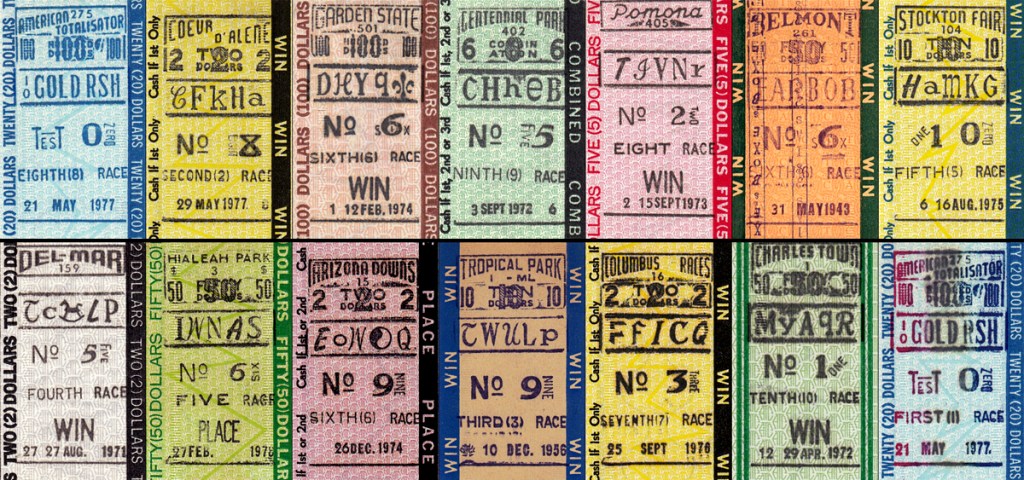
Note: one intended purpose of this blog was to distribute the author’s private database (mentioned below) to interested collectors and researchers. However, Wordpress does not allow that type of file to be inserted for downloads. Thus, Plan B went into effect. Instead of the database, a text file has been made available for a download. When unzipped, it can be read in Notepad. It is not as professional and powerful as the Access database, but it is better than nothing until a way to distribute the database is found. Sorry for the inconvenience.

More. Despite its claims, W o r d p r e s s is a very difficult site on which to publish. It is too complex for the average customer. That is why this blog will end when the initial annual payment meets its closing date. In the meantime, the database will be updated at least once before termination. As of this writing, more 2024 races have been added and after the Breeders Cup happens, many more will be added also. A few corrections have been made and about two dozen betting ticket numbers have been added also. If any reader possesses some programs with betting numbers that do not appear, then please email me at toteticket @ yahoo.com. For those interested in obtaining the Microsoft Access database, please use the same email address. It will cost about 10 bucks to cover the costs of a thumb drive and postage.

This site is devoted to the collection of horse racing ephemera. “Ephemera” is a plural noun that refers to materials which were produced for short-term purposes and meant to be discarded when no longer needed. Generally they were fashioned as economically as possible, and were made of paper.

There is a wide variety of ephemera items. Many categories have had collector interest for more than a century. There are a host of mature, specific collectible markets: maps, stock certificates, postage stamps, greeting cards, political and movie posters, handbills, postcards, and on and on. Each field has been long established, and generally has spawned experts, clubs, newsletters and, recently, websites. Each field might have multiple websites in addition to specialized commercial establishments devoted to selling items. The epitome of the latter is sports card shop.

In the horse racing environment, many specimens also have been kept and stored. However, there is not much organization to the effort. Unlike the areas mentioned above, auction houses are unable to reliably assess valuations. Reliable price guides for racing ephemera do not exist in numbers.

The soul of this site is a database. The database is a Microsoft Access (2002 version) file and it requires the user to have MS Office installed on your system. Later versions handle the database successfully, too.

Below is a download button for a text file. It can be read in Notepad. It is a substitute for the Access database that was intended. It contains the same information as the database, but it is in a clumsier format. It also does not contain the large Access query library of individual horses.

IMPORTANT: one does not have to be a database expert or veteran to use this item. A few minutes of usage will overcome any lack of experience with databases.

Now that the database is loaded, here is another download featuring the track abbreviations used by it. For the Twentieth and Twenty-First centuries, traditional Daily Racing Form and Equibase are listed. For earlier ones, the author created them.

Its premise is based upon the proposition that the value of any horse racing ephemera item increases if it can be connected to a famous horse. The database is a chronological list of all North American races in which notable horses ran. Directly below is an excerpt which illustrates some of its power.

The list contains the dates on the left, followed by the racetrack abbreviation, and the horses (H1, H2, H3, H4) on the right. In the middle are the race numbers and the names of significant historical races. For example, On May 8, 1944 in the 5th race at Churchill Down, the notable horse Equifox competed and shows up in that program.

There are several other features. For instance, the letter “M” after a horse’s name indicates that it was its first race (or, in the case of foreign horses, their first North American appearances). See: May 13, 1944 at Churchill Downs for Fighting Step. Also, the letter “L” after a horse’s name indicates that it was the runner’s last lifetime start. See: May 13, 1944 at Belmont Park for Shut Out and Alsab. Why? Some collectors attached increased value for memorabilia of that type.

They are not all great horses, but are ones who had an impact on the sport. There are over a dozen criteria for membership in the list. This is all explained in the database’s instructions [Ed: another download that will be added soon also].

As the viewer can see, the races are ordered by date, top to bottom, with the earlier ones at the top. The date stretches from the late 18th Century to the present.

Thus the database acts as a speedy reference guide while considering an auction of a dated piece of memorabilia. Within seconds it filters valuable items from the nearly worthless ones. For example, if one is confronted with a horse racing program, then by reading its date and scrolling to the same date in the database, a match can be detected. The user can instantly know whether the races contained inside featured notable horses … and is worth more than a bland program.

On the other hand, if the piece in question is a pari-mutuel ticket, the database can also help in the same manner. By looking at the date, the racetrack, and the betting number on the ticket, a buyer can determine if it was wagered on a high-quality racer. Just compare it to the number listed after the horse’s name.

There are two types of betting numbers. Before the advent of automated totalizator machines, racetracks employed pre-printed mutuel tickets (also called “rack” or “box” tickets.) They usually featured 4-digit numbers, although early ones had only two or three digits. In a few instances, they were a combination of letters and digits. See: May 6, 1944 in the database excerpt above for the Kentucky Derby betting number of the winner Pensive. After that, the betting numbers on tote tickets invariably were the horses’ saddlecloth numbers.

Above is the 1927 Churchill Downs Program featuring the two year old filly Champion, Anita Peabody. Her betting number was “2330.” In that era, there was a maximum of ten wagering entries per race. Usually, the last digit of the expected favorite was “0”, the second favorite was “1,” etc. If more than 10 entries existed, then the worst horses were gathered into the field and assigned “9” as their last digit. (More explanation will follow in a blog post.)

As one can see in the database excerpt, not all betting numbers exist yet, and likely never will. Generally, for races before 1954, it requires having access to the programs in question. For many situations, those programs do not exist or are not available for scrutiny. Also, for many earlier dates pari-mutuel tickets were not sold. For example, before April 1940, the New York racetracks used the bookie system exclusively.

The database is an incredible, handy tool. It is unique. It began to be built in the year 2004 and was limited in size. But that changed over the years as the owner sought more research potential for goals other than memorabilia collection.

It is still being built as new important races are added. Also, the pari-mutuel ticket numbers are regularly added as that information appears on the internet.

At first the owner kept this tool private. He often obtained serious specimens at ridiculously low prices because neither the seller nor the other bidders realized their importance. Years passed and the owner shared it with a handful of fellow collectors who similarly gained a tremendous advantage in auction situations. Along with the owner, they were able to separate the wheat from the chaff in mere seconds.

Now, so can you.

Criteria for Horses in the Database

 This is an alphabetical index—dating back to the 1790s—of the American (and some foreign) race horses that are contained in the Chronological Database download. It contains all of the important racers since that time. It also includes many animals guessed to be potentially “interesting” to memorabilia collectors by the compiler, the author.

 This project originally was devised to concentrate on the era of colored totalizator tickets, and their to collection specifically. But it has since been enlarged to encompass other famous talented ones who ran before the arrival of the mutuel system, in order to aid in collecting dated artifacts of any nature. Since the primary purpose was to “calendarize” American starts for collectors to use, the author originally did not include numerical totals of overseas races in these summaries. He has since backtracked, and has begun adding such data to the list on the following pages, although that effort still re-mains incomplete. In the database itself, overseas races do not appear.

 This is not a rigidly-constructed list, and undoubtedly includes dozens that could be supplanted by those having superior abilities, if not racing accomplishments. In fact, a handful of them are inferior horses that were subjects of research by the author for other projects. He decided not to bother to delete them, because their lesser stature is fairly obvious. Bottom line: after merit, or having a memorable story, recognizability was the chief remaining criterion for inclusion for all of the others.

 That being said, the vast majority of horses meet at least one of the following:
  1. Hall of Famer.
  2. Horse of the Year.
  3. Recognized or unofficial annual champion of one of categories such as three-year old, sprinter, or the like.
  4. Leading money winner.
  5. American Triple Crown race winner.
  6. Breeders’ Cup race winner.
  7. Important sire or dam.
  8. Winner of multiple important stakes races.
  9. Kentucky Derby runner-up.
  10. Other characteristics, such as important early contributor to Quarterhorse breeding.
  11. Participant in certain memorable races. (e.g., the other three also-rans besides Sham in Secretariat’s Belmont were not otherwise noteworthy, except for that particular race.)
  12. Historic early-Californian runner; or a significant west coast racer that might have merited better recognition if based in the East.
  13. Certain busy domestic horses that helped keep the sport alive during its legally-impaired period in the early 1900s.
  14. Several horses (possibly non-Thoroughbred) which held historic significance during the post-Revolutionary times or the gold rush era in California.
  15. Unimportant animal that happened to win a stakes race of continuing significance, when no other included horse happened to be entered. For example, a winner of the Peter Pan or Arlington Classic. These notable stakes races have seen their significance increase or decrease over the years, but, nevertheless, the author includes most of their runnings regardless. Again, this was done with memorabilia in mind; an uncashed ticket on one of these winners would have some value beyond specimens representing also-rans in the same races.
  16. Brilliant two-year-old which had its career cut short by injury.
  17. The alphabetical index below does not contain certain Breeders’ Cup race winners that came from overseas to compete only once. Their appearances can be easily spotted in the chronological database without the help of this index. Also, the records of some horses are incomplete, either due to a. the fact they are present day horses that were still in training at the time of this compilation; or b. they are horses from the distant past for which the author has not been able to research fully yet. For some of the latter horses, their full records likely will never be completely discovered (for a number of reasons). In each case, the author has denoted them with the abbreviations shown at the top of the list on the next page.

On the other hand, the author has uncovered previously non-included races for a host of those in the list; among them are for some of the most prominent Thoroughbreds in American history, such as Planet and Pan Zareta. In addition, the author has added races that were recorded, but never previously compiled by record-keepers from the distant past; and whose errors have been passed down through many generations of their counterparts that used them without checking. So, should a reader notice a discrepancy between what has been published heretofore and the data in this index, it is the result of one of those reasons. In order to highlight those circumstances, the author has put notes in the far right column of the database to denote the previously missing races.


Some consideration has been given to recent horses who have won the races containing massive purses in Dubai and Saudi Arabia. Not every one is included. Generally those who won other prestgious U. S. races are included.

In order to achieve some consistency, the author has added all walkover races to the horses’ records. In the past, some compilations by others have included them, and others have not. The author considers all of them to be bona fide races.


In the first pages of the database are horses that ran before the existence of any “racing calendars,” which appeared later and compiled racing results. The author attempted to expand the list despite of that. It was done through the usage of old newspaper articles of the era plus some data contained in the earliest editions of the “American Turf Register.” Erring on the side of more-rather-than-less, he included some lesser racers that might help to sleuth the unknown dates which pepper that part of the project.


Finally, complete records for a few horses that ran in both flat and hurdles races are included, but not all. Those champions who gained their status solely by running in jumps have significant gaps. However, the author might reconsider and complete them at a later date.

Leave a comment